How to Find Your Moon Sign in Vedic Astrology: Chandra Rashi Guide
Your Moon sign is not the same as your Sun sign. Most people know their Sun sign from common horoscopes, but in Vedic astrology, the Moon sign matters far more for your mind, emotions, habits, and the timing of major life events.
Your Moon sign is called Chandra Rashi. It shows how your mind works, how you respond to stress, what makes you feel secure, and how your inner life evolves over time. Saturn periods like Shani Sade Sati and Shani Dhaiya both calculate from your Moon sign, not your Sun sign. Your Vimshottari Dasha sequence also starts from the nakshatra your Moon occupied at birth.
This means if you do not know your Moon sign, you cannot accurately apply most of the predictions, transits, and timing systems in Vedic astrology.
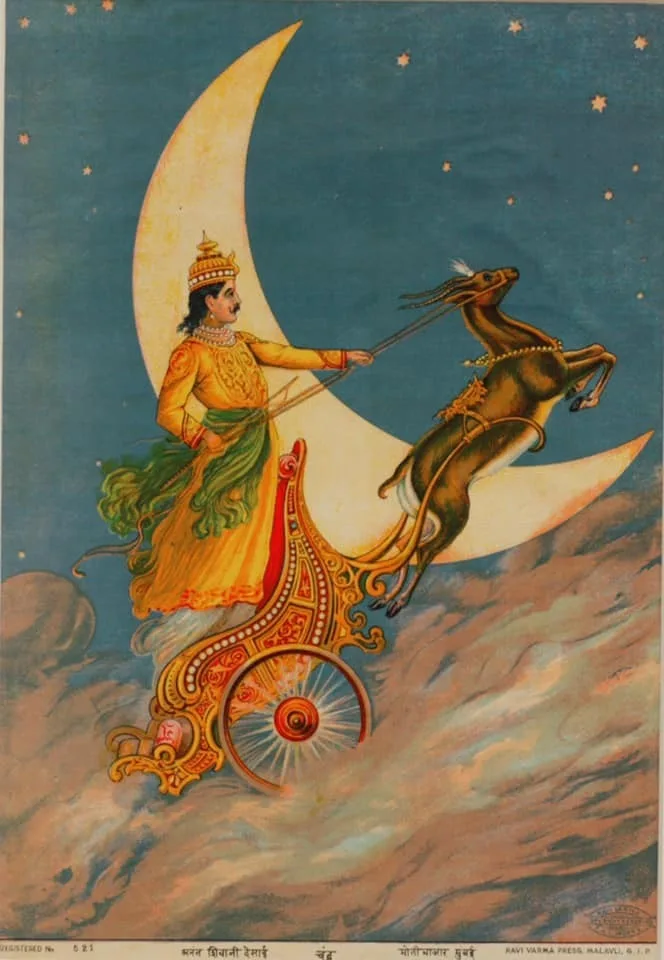
NASA confirms that the Moon completes one orbit around Earth in about 27.3 days. The Moon moves quickly through the zodiac, spending roughly two and a half days in each sign. This fast movement means your exact birth time affects whether the Moon was in one sign or the next. A difference of just a few hours can change your Moon sign. Read NASA Moon orbital facts
Pew Research Center reported in 2025 that 30 percent of adults in the United States consult astrology, tarot cards, or fortune tellers at least once a year. MarkNtel Advisors valued the global astrology market at USD 3 billion in 2024. More people check charts online, but many use wrong calculators or wrong zodiac systems. You need the correct method. Read Pew Research Read MarkNtel report
Astrologer K. N. Rao places the Moon at the center of all prediction work. He teaches that Moon sign, Moon nakshatra, and dasha together give the primary timing framework. B. V. Raman called the Moon the most important planet in a birth chart for understanding the mind, health, and general life tendencies.
Why Moon Sign Matters More Than Sun Sign in Vedic Astrology
Western astrology gives the Sun sign the central role. Vedic astrology gives the Moon that role.
The Sun changes signs roughly once per month. The Moon changes signs every two and a half days. This frequency makes the Moon far more precise in mapping individual differences. Two people born in the same month may share a Sun sign but have completely different Moon signs.
Your Moon sign shows:
- How your mind processes emotion and stress
- Your natural habits and instincts
- Your relationship with your mother and childhood home
- Your comfort zone and what makes you feel safe
- Your memory and emotional intelligence
- The foundation of your Vimshottari Dasha timing
Saturn transits like Sade Sati and Dhaiya both operate from your Moon sign position. This means your Moon sign directly determines whether you are currently in Sade Sati, which phase you are in, and whether Saturn's current position challenges your emotional life.
If you want to understand Saturn Transit Effects on Moon Signs or know your dasha timing from Vimshottari Dasha in Vedic Astrology, you need your correct Moon sign first.
Vedic vs. Western Moon Sign: Why They Often Differ
Many people find their Vedic Moon sign differs from the Western Moon sign they previously knew. This happens because Vedic and Western astrology use different zodiac systems.
The sidereal vs. tropical zodiac
Western astrology uses the tropical zodiac, which aligns with the seasons. The tropical zodiac defines Aries from the spring equinox, which falls around March 21 each year.
Vedic astrology uses the sidereal zodiac, which aligns with actual star positions in the sky. Over centuries, the Earth's axis wobbles in a cycle called precession. This means the spring equinox point drifts backward through the zodiac over time.
Currently, the sidereal zodiac lags about 23 to 24 degrees behind the tropical zodiac. This difference is called the ayanamsa.
What ayanamsa means for your Moon sign
Because of ayanamsa, your Moon position in Vedic astrology falls roughly 23 degrees earlier than in Western astrology. If the Western system puts your Moon at 5 degrees Taurus, the Vedic system using Lahiri ayanamsa places it around 11 to 12 degrees Aries.
This means people born near the boundary of two signs often have a different Moon sign in Vedic astrology than in Western astrology.
Which ayanamsa should you use?
The Lahiri ayanamsa is the most widely used in modern India and is the official government-recognized ayanamsa. Most online Vedic calculators default to Lahiri unless you change the setting.
Raman ayanamsa and Krishnamurti ayanamsa are other options used by specific astrologers. For general Vedic astrology learning, use Lahiri unless you have a specific reason to switch.
The Exact Birth Details You Need
You need three specific details to find your Chandra Rashi accurately.
Birth date
Your birth date gives the planetary positions for that day. This is the most basic requirement and you likely know this.
Exact birth time
This is the most critical and often most difficult part. Because the Moon moves through a sign in about two and a half days, it covers roughly half a degree per hour. If the Moon is near the boundary of two signs, even a difference of one or two hours changes your Moon sign.
Use the exact birth time recorded on your birth certificate. If you do not have a birth certificate, ask elderly family members who were present. Parents often remember whether a birth happened in the morning, afternoon, evening, or night, which narrows the window significantly.
If you absolutely cannot determine the birth time, an experienced astrologer can use birth time rectification. This involves working backward from known life events to determine the most likely birth time. It requires skill and takes time, but it produces a working chart.
Birth place
You need the city and country of your birth, not your current location. The birth place determines your local time zone and the latitude and longitude used to calculate house positions. Enter the city where you were physically born, even if you moved away immediately after.
How to Find Your Moon Sign Step by Step
Step 1: Use a reliable Vedic astrology calculator
Choose a calculator that specifically uses the sidereal zodiac with Lahiri ayanamsa. Several options work well:
- AstroSage (astrosage.com) offers a free birth chart in Hindi and English
- Astro-Vision offers professional quality calculators
- Jagannatha Hora is free desktop software widely used by serious students
Enter your birth date, exact birth time (in 24-hour format helps avoid AM/PM confusion), and birth city.
Step 2: Select Lahiri ayanamsa
Most Vedic calculators default to Lahiri. If the calculator asks you to choose, select Lahiri unless you follow a specific tradition that uses a different ayanamsa.
Step 3: Find the Moon symbol in your chart
In a North Indian style chart, the Moon is shown as a circle with a crescent or simply the number or abbreviated name of the Moon inside the house box. In a South Indian style chart, the Moon appears as "Mo" or by its glyph inside its house.
The sign written at the top of the house containing the Moon is your Moon sign (Chandra Rashi).
Step 4: Note your Moon nakshatra
Below your Moon sign, the calculator will show the nakshatra (lunar mansion) your Moon occupied. Write this down along with the Moon sign. Your nakshatra starts your Vimshottari Dasha sequence and gives finer detail about your mind and character.
The 27 Nakshatras and Their Moon Sign Positions
Each of the 27 nakshatras spans exactly 13 degrees and 20 minutes of the zodiac. The nakshatra your Moon occupied at birth starts your Vimshottari Dasha and reveals deeper character traits beyond the Moon sign alone.
| Nakshatra | Zodiac Degrees | Moon Sign | Dasha Lord | Years |
|---|---|---|---|---|
| Ashwini | 0°00' to 13°20' Aries | Aries | Ketu | 7 |
| Bharani | 13°20' to 26°40' Aries | Aries | Venus | 20 |
| Krittika | 26°40' Aries to 10°00' Taurus | Aries/Taurus | Sun | 6 |
| Rohini | 10°00' to 23°20' Taurus | Taurus | Moon | 10 |
| Mrigashira | 23°20' Taurus to 6°40' Gemini | Taurus/Gemini | Mars | 7 |
| Ardra | 6°40' to 20°00' Gemini | Gemini | Rahu | 18 |
| Punarvasu | 20°00' Gemini to 3°20' Cancer | Gemini/Cancer | Jupiter | 16 |
| Pushya | 3°20' to 16°40' Cancer | Cancer | Saturn | 19 |
| Ashlesha | 16°40' to 30°00' Cancer | Cancer | Mercury | 17 |
| Magha | 0°00' to 13°20' Leo | Leo | Ketu | 7 |
| Purva Phalguni | 13°20' to 26°40' Leo | Leo | Venus | 20 |
| Uttara Phalguni | 26°40' Leo to 10°00' Virgo | Leo/Virgo | Sun | 6 |
| Hasta | 10°00' to 23°20' Virgo | Virgo | Moon | 10 |
| Chitra | 23°20' Virgo to 6°40' Libra | Virgo/Libra | Mars | 7 |
| Swati | 6°40' to 20°00' Libra | Libra | Rahu | 18 |
| Vishakha | 20°00' Libra to 3°20' Scorpio | Libra/Scorpio | Jupiter | 16 |
| Anuradha | 3°20' to 16°40' Scorpio | Scorpio | Saturn | 19 |
| Jyeshtha | 16°40' to 30°00' Scorpio | Scorpio | Mercury | 17 |
| Mula | 0°00' to 13°20' Sagittarius | Sagittarius | Ketu | 7 |
| Purva Ashadha | 13°20' to 26°40' Sagittarius | Sagittarius | Venus | 20 |
| Uttara Ashadha | 26°40' Sagittarius to 10°00' Capricorn | Sagittarius/Capricorn | Sun | 6 |
| Shravana | 10°00' to 23°20' Capricorn | Capricorn | Moon | 10 |
| Dhanishtha | 23°20' Capricorn to 6°40' Aquarius | Capricorn/Aquarius | Mars | 7 |
| Shatabhisha | 6°40' to 20°00' Aquarius | Aquarius | Rahu | 18 |
| Purva Bhadrapada | 20°00' Aquarius to 3°20' Pisces | Aquarius/Pisces | Jupiter | 16 |
| Uttara Bhadrapada | 3°20' to 16°40' Pisces | Pisces | Saturn | 19 |
| Revati | 16°40' to 30°00' Pisces | Pisces | Mercury | 17 |
Your Moon nakshatra tells you more than just your dasha starting point. Each nakshatra has a deity, symbol, ruling planet, and specific psychological qualities. You read the nakshatra to understand your mind in fine detail.
Moon Sign Characteristics at a Glance
Your Moon sign colors how your mind processes experience. Here is a brief profile of the Moon in each sign.
Aries Moon: Quick emotional responses, independent instincts, strong desire for action, impatience with slow situations, courage in the face of difficulty. Your Sade Sati runs when Saturn transits Pisces, Aries, and Taurus.
Taurus Moon: Strong desire for comfort, stability, beauty, and material security. Emotionally steady, sometimes stubborn, deeply loyal. Best Moon position in classical texts (exalted). Your Sade Sati runs when Saturn transits Aries, Taurus, and Gemini.
Gemini Moon: Curious, quick-learning, communicative mind, emotionally restless, needs variety and mental stimulation. Your Sade Sati runs when Saturn transits Taurus, Gemini, and Cancer.
Cancer Moon: Deep emotional sensitivity, strong attachment to home and family, powerful memory, nurturing instincts. Moon owns Cancer and feels strong here. Your Sade Sati runs when Saturn transits Gemini, Cancer, and Leo.
Leo Moon: Proud, generous, emotionally needs recognition and respect, creative spirit, strong loyalty to those they love. Your Sade Sati runs when Saturn transits Cancer, Leo, and Virgo.
Virgo Moon: Analytical, detail-conscious, health-aware, serves others through practical help, tends to worry and overthink small details. Your Sade Sati runs when Saturn transits Leo, Virgo, and Libra.
Libra Moon: Socially aware, emotionally balanced, needs harmony and partnership, aesthetic sensibility, fair-minded. Your Sade Sati runs when Saturn transits Virgo, Libra, and Scorpio.
Scorpio Moon: Intense emotional depth, loyalty and jealousy both strong, investigative mind, hidden emotional life, transforms through crisis. Moon is debilitated in Scorpio. Your Sade Sati runs when Saturn transits Libra, Scorpio, and Sagittarius.
Sagittarius Moon: Optimistic, philosophical, freedom-loving, emotionally honest, needs space and new ideas. Your Sade Sati runs when Saturn transits Scorpio, Sagittarius, and Capricorn.
Capricorn Moon: Emotionally reserved, practical, serious approach to feelings, self-reliant, builds slowly, loyal long-term. Your Sade Sati runs when Saturn transits Sagittarius, Capricorn, and Aquarius.
Aquarius Moon: Unconventional, humanitarian, emotionally detached but deeply caring for groups and causes, innovative. Your Sade Sati runs when Saturn transits Capricorn, Aquarius, and Pisces.
Pisces Moon: Compassionate, intuitive, spiritually inclined, emotionally fluid, vivid inner life, idealistic. Your Sade Sati runs when Saturn transits Aquarius, Pisces, and Aries.
Common Mistakes When Finding Your Moon Sign
Mistake 1: Using your Sun sign as Moon sign
Your Sun sign comes from the month of your birth and changes once per month. Your Moon sign is determined by the Moon's actual position at your birth hour. They are rarely the same.
Mistake 2: Using a Western astrology calculator
Western calculators use the tropical zodiac. Vedic astrology uses the sidereal zodiac. If you use a Western calculator to find your Vedic Moon sign, the result will likely be wrong by about 23 degrees.
Always use a calculator that specifies "sidereal" or "Vedic" and uses Lahiri ayanamsa.
Mistake 3: Entering wrong birth time
If you enter a rough estimate instead of your exact birth time, you may get the wrong Moon sign, especially if your birth happened near the time the Moon changed signs.
Check your birth certificate. Ask family members. Contact the hospital if necessary. The effort is worth it.
Mistake 4: Using current city instead of birth city
You must enter the city where you were born, not where you currently live. The calculator needs latitude, longitude, and time zone from your birth location.
Mistake 5: Ignoring the Moon's degree
Even with the right Moon sign, check the Moon's exact degree. If your Moon sits at 0 to 2 degrees or 28 to 30 degrees of a sign, it is near a sign boundary. A small error in birth time could place the Moon in the previous or next sign. Ask an astrologer to verify boundary cases.
What to Do After Finding Your Moon Sign
Once you know your Chandra Rashi and birth nakshatra, you can use this information for:
Checking Sade Sati status: Use your Moon sign to determine whether you are currently in Shani Sade Sati and which phase applies.
Checking Dhaiya status: Use your Moon sign to check whether you are in Shani Dhaiya based on the 4th or 8th position of Saturn from your Moon.
Calculating Vimshottari Dasha: Your birth nakshatra determines which planet's dasha runs at birth and the remaining balance. Read Vimshottari Dasha in Vedic Astrology to understand how to use this system.
Checking Saturn transit: Use your Moon sign to understand how the current Saturn Transit Effects on Moon Signs apply to your life right now.
Reading a full birth chart: Your Moon sign gives the foundational perspective for your entire chart reading.
FAQ About Finding Your Moon Sign
What is Chandra Rashi in Vedic astrology?
Chandra Rashi is your Moon sign in Vedic astrology. It is the zodiac sign the Moon occupied at the exact moment of your birth, calculated using the sidereal zodiac with Lahiri ayanamsa.
Why is my Vedic Moon sign different from my Western Moon sign?
The two systems use different zodiac frameworks. Western astrology uses the tropical zodiac aligned with the seasons. Vedic astrology uses the sidereal zodiac aligned with actual star positions. The current difference between them, called ayanamsa, is about 23 to 24 degrees. This shifts your Moon sign position by roughly one sign in many cases.
Can my Moon sign change in one day?
Yes. The Moon moves through a zodiac sign in about two and a half days. This means if you were born close to the time the Moon moved from one sign to the next, someone born just a few hours before or after you might have a different Moon sign. Accurate birth time is essential.
What if I do not know my exact birth time?
Ask family members, check your birth certificate, or contact the hospital where you were born. If you cannot find the exact time, use birth time rectification with an experienced astrologer. This process uses known life events to work backward and determine the likely birth time.
Is my Moon sign the same as my Lagna (rising sign)?
No. Your Moon sign is determined by the Moon's zodiac position at birth. Your Lagna (ascendant or rising sign) is determined by which zodiac sign was rising on the eastern horizon at the exact time and place of your birth. These are two different calculations that often produce different signs.
Which Moon sign is the strongest?
Taurus Moon is considered the most powerful because the Moon reaches its exaltation point in Taurus. Taurus Moon gives emotional stability, material security, and a calm, grounded mind. However, every Moon sign has its strengths when supported by the chart.
How does Moon sign connect to Sade Sati?
Sade Sati starts when Saturn transits the 12th sign from your Moon sign. It continues through your Moon sign and ends after Saturn leaves the 2nd sign from your Moon. You cannot track Sade Sati without knowing your Moon sign. Read the full explanation at What is Shani Sade Sati?